
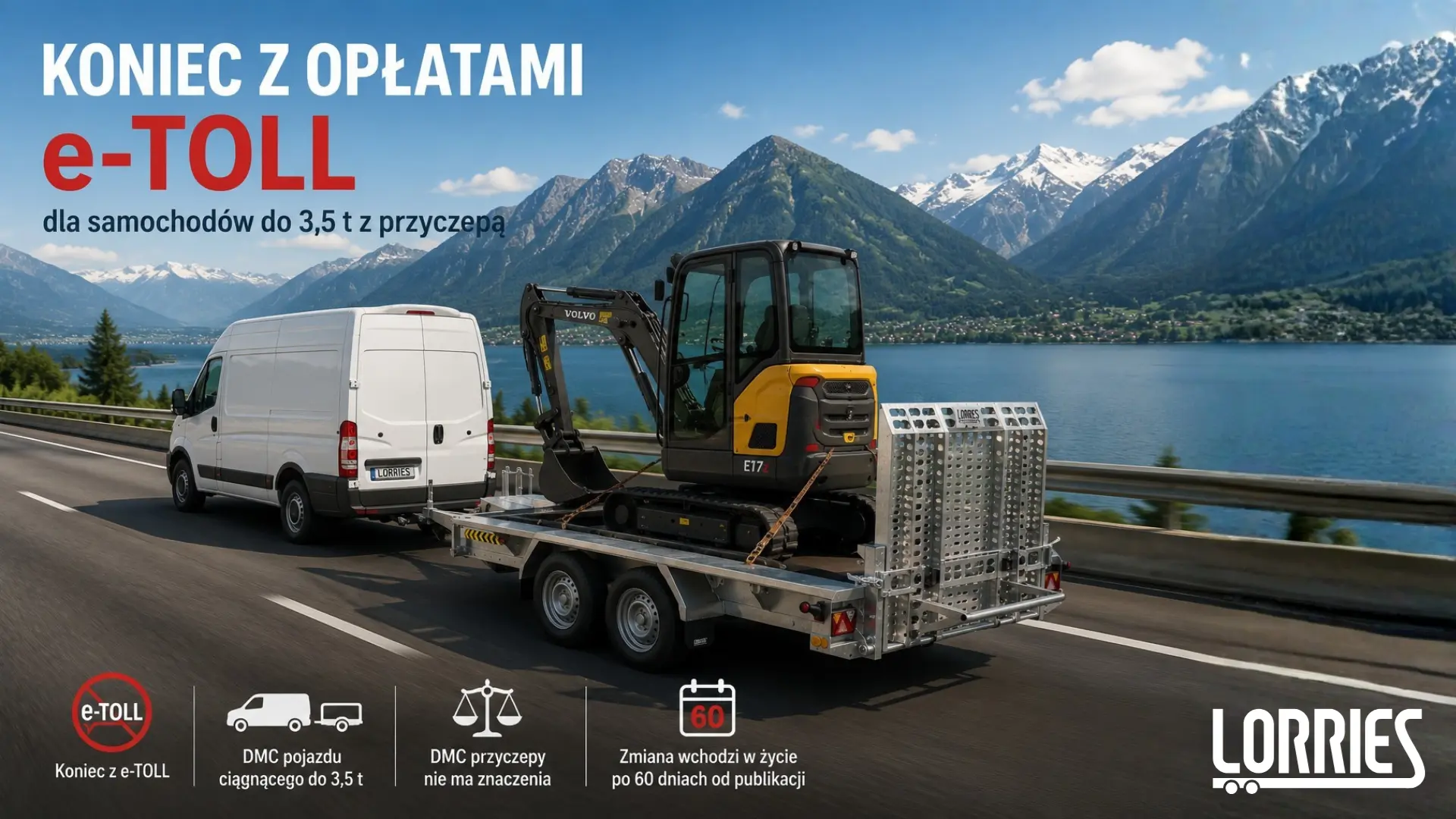
e-TOLL for trailers will change starting September 21, 2026. The President signed act amending the rules for charging fees in the e-TOLL system. After the new regulations come into effect, the obligation to pay the electronic toll will no longer be determined by the total permissible mass of the vehicle and trailer. The key factor will be gross vehicle weight rating of the towing vehicle alone.
This means that a passenger car, pickup truck, or light commercial vehicle with a GVWR not exceeding 3.5 tons will not be subject to the e-TOLL fee simply because it forms a set with a trailer with a GVWR exceeding 3.5 tons.
How do the current e-TOLL regulations work?
In accordance with the rules in effect until September 20, 2026, the e-TOLL system covers motor vehicles and vehicle combinations whose permissible gross vehicle weight exceeds 3.5 t. In the case of a car with a trailer, the gross vehicle weight of the entire set is therefore taken into account.
In practice, even a passenger car or a light commercial vehicle with a Gross Vehicle Weight (GVW) of up to 3.5 tons can be classified as a heavy vehicle for the e-TOLL system if the total GVW exceeds 3.5 tons after connecting a trailer.
The driver must then register the vehicle in the system, ensure the transmission of location data, and correctly account for journeys on roads subject to electronic toll collection.
How will the e-TOLL rules change for trailers?
The amendment changes how vehicle combinations are classified. The obligation to pay a fee will apply to motor vehicles with a gross vehicle weight exceeding 3.5 tons, and combinations consisting of such a vehicle and a trailer or semi-trailer.
The most important rule will therefore be very simple:
If the gross vehicle weight (GVW) of the towing vehicle does not exceed 3.5 metric tons, the combination will not be subject to the e-TOLL fee solely because a trailer is attached.
DMC trailers will no longer be taken into account when determining the obligation to use e-TOLL. The official goal of the amendment is to reduce the administrative and financial burdens on owners and users of vehicles up to 3.5 t using trailers or semi-trailers.
New rules e-TOLL for trailers will be particularly important for entrepreneurs and private users of passenger cars, pickups, and light commercial vehicles.
Who will be exempt from e-TOLL fees?
The change will be significant for both private users and businesses. Those who will benefit include:
- construction and service companies using trailers for transporting machines, mini excavators, scaffolding, compactors, and other equipment,
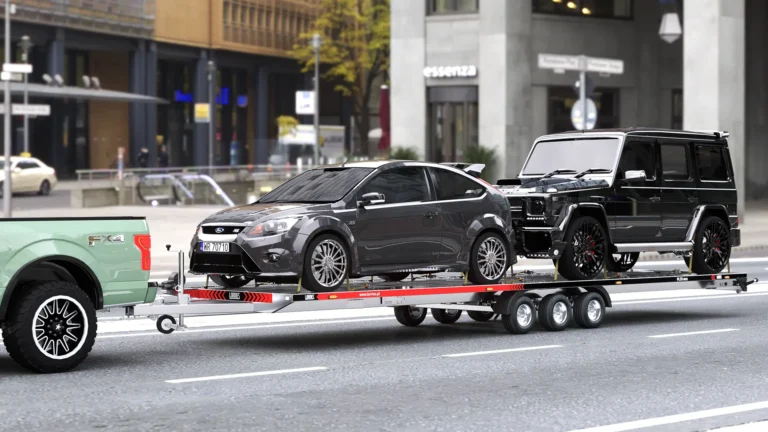
- entrepreneurs using car carrier trailers for transporting cars and machinery,
- tradespeople and assembly teams traveling in vans with trailers,
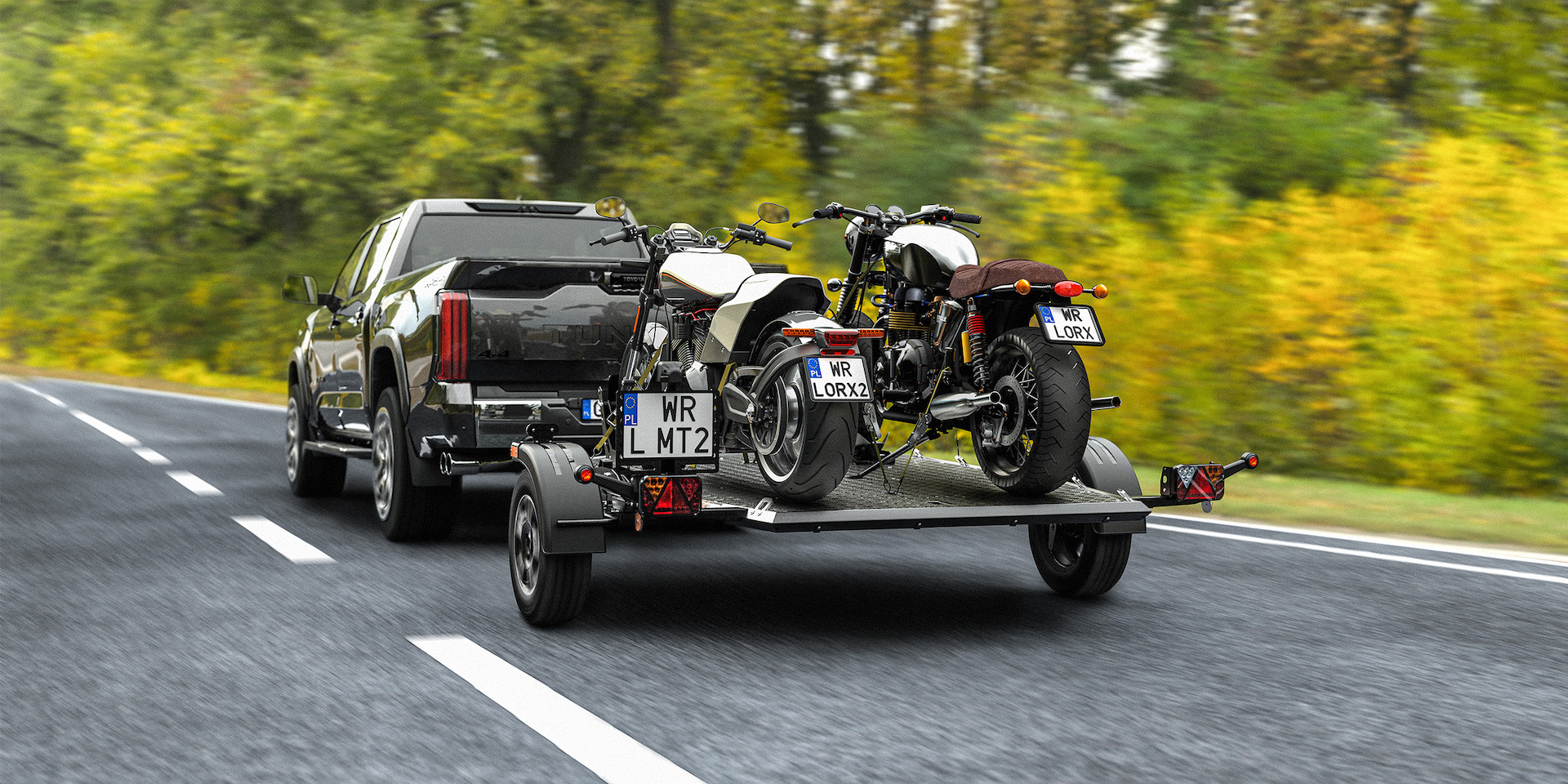
- Companies transporting boats, motorcycles, ATVs, or recreational equipment,
- owners boat trailers, camping, motorcycle, and cargo,
- users of pickup trucks, SUVs, and vans towing heavier-duty trailers.

The exemption was not limited solely to recreational vehicles or to private travel. The decisive factor will be Towing vehicle DMC, not the type of cargo carried or the trailer's intended use.
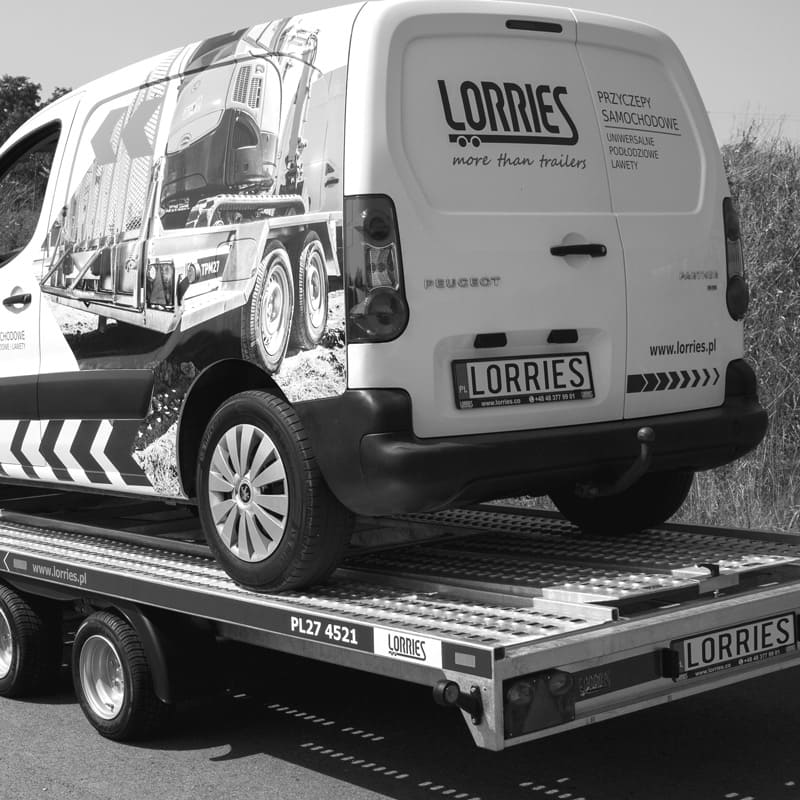
Example: Van with a car carrier trailer
Let's assume that a business owner uses a delivery truck with a gross vehicle weight rating (GVWR) of 3.5 metric tons and a car-hauler trailer with a GVWR of 3.5 metric tons.
The DMC of the entire team is 7 t in this case. In accordance with the rules applicable until September 20, 2026, exceeding the 3.5 t threshold means that e-TOLL must be used on roads covered by the system.
From September 21, 2026, such a set will not be covered by e-TOLL, as the GVW of the towing vehicle itself does not exceed 3.5 t.
It will be different for towing vehicles whose GVW (Gross Vehicle Weight) exceeds 3.5 t. Such vehicles will still be subject to a fee, even when they are moving with a trailer.
Will the trailer's weight no longer matter?
The weight and GVWR of the trailer will not determine the obligation to use the e-TOLL system if the towing vehicle has a GVWR of up to 3.5 t.
However, this does not mean that trailer parameters can be completely ignored. You still need to observe, among other things:
- allowable trailer weight specified for the car,
- maximum combination technically permissible laden mass,
- actual vehicle mass,
- allowable axle loads,
- required driver's license category,
- regulations regarding overrun brakes and coupling devices,
- limitations arising from vehicle registration and type approval documents.
The amendment changes the rules for collecting road tolls. It does not increase the permissible trailer load capacity or the technical capabilities of the car.
The driver's license remains unchanged
Exemption from e-TOLL does not change the required driving qualifications for the vehicle combination. Depending on the parameters of the vehicle and trailer, a category B driver's license, code 96, or category B+E may still be required.
Therefore, before starting your journey, you should check not only the vehicle's GVWR, but also the trailer's GVWR, the vehicle's technical capabilities, and the scope of your license.
e-TOLL for trailers – when will the new rules take effect?
The act was published in the Journal of Laws on July 22, 2026, under item 982. The provisions concerning the new fee calculation rules will come into force September 21, 2026., which means after 60 days from the date of publication.
Until September 20, 2026, the current rules shall apply. If the total permissible gross vehicle weight of the car and trailer exceeds 3.5 tons, the combination may still be subject to the e-TOLL requirement.
The content of the law can be checked directly on Journal of Laws - Dz.U. of 2026, item 982.
What about the funds remaining in the e-TOLL account?
The act provides for the possibility of recovering funds allocated to vehicles that, after the changes in regulations, will no longer be subject to electronic tolls.
The return will be made at the user's request. The request must be submitted within the timeframe 6 months from the date the act enters into force.
Car owners with trailers should therefore check their e-TOLL account and the official instructions for refunds after the new regulations come into force.

A big convenience for trailer users
The new rules mean not only no tolls, but also less formality. Businesses and private users driving vehicles up to 3.5 tons with trailers will not have to use the e-TOLL system solely because the gross vehicle weight of the entire combination exceeds 3.5 tons.
This is a particularly significant change for users of car trailers, construction trailers, boat trailers, motorcycle trailers, camping trailers, and trailers designed for transporting machinery and equipment.
Changes in scope e-TOLL for trailers so they will facilitate the use of trailers towed by passenger cars, pickups, and light commercial vehicles with a GVW of up to 3.5 t.
From September 21, 2026, the obligation to use e-TOLL will be determined by the gross vehicle weight of the towing vehicle, not the combined gross vehicle weight of the vehicle and trailer.
Also check the full Lorries trailers offer intended for the transport of vehicles, boats, motorcycles, construction machinery, and other cargo.
Official information and sources:
Law published in the Journal of Laws
Official e-TOLL vehicle classifier